
Chapter 7 vs Chapter 13 in Texas: Which Is Right for You?
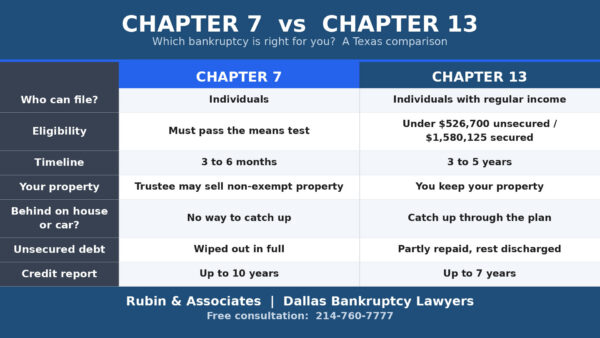 Most people who consider bankruptcy in Texas face the same first question: should I file Chapter 7 or Chapter 13? The two chapters work very differently, and it is important to understand the differences. Chapter 7 eliminates qualifying debt in a matter of months. Chapter 13 restructures debt into a court-supervised repayment plan that lasts three to five years. Neither is better in the abstract. The right choice depends on your income, your assets, whether you are behind on secured debts like a mortgage or car loan, and what you need the bankruptcy to accomplish. This guide compares the two chapters side by side so you can understand which path fits your situation.
Chapter 7 bankruptcy at a glance
A Chapter 7 bankruptcy is often called liquidation bankruptcy, although in Texas the name is misleading. A court-appointed trustee is authorized to sell non-exempt assets and distribute the proceeds to creditors. In practice, Texas exemption law is among the most generous in the country, so the large majority of Chapter 7 filers keep everything they own. Cases with no assets for the trustee to administer are called no-asset cases, and they are the norm, not the exception. (more…)
 The short answer: what Chapter 7 costs in Dallas
 Missing one credit card payment is stressful. Missing several is worse. The calls start, the interest charges pile up, and the balance grows faster than you can pay it down. If you are in that position right now, you have more options than you probably realize, and doing nothing is the only choice that never improves the situation.
 Deciding to file for bankruptcy is never an easy choice. By the time most people reach out to an attorney, they have already spent months worrying about mounting bills, collection calls, and the fear of losing something they have worked hard to keep. Choosing the right bankruptcy lawyer is one of the most important decisions you will make in that process, because the person you hire will shape both the outcome of your case and the way you feel while going through it. The good news is that a thoughtful, informed choice is well within your reach. Knowing what to look for makes the difference between a stressful ordeal and a steady path toward relief.