
Chapter 7 vs Chapter 13 in Texas: Which Is Right for You?
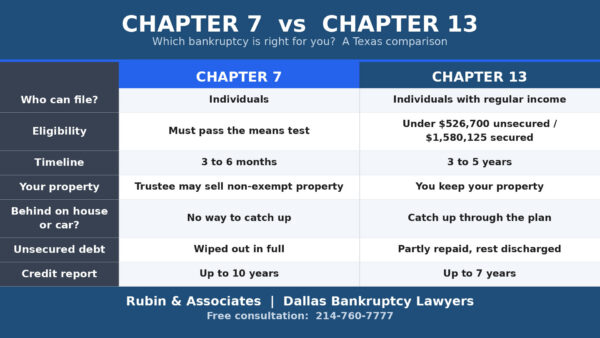
Chapter 7 vs. Chapter 13 bankruptcy in TexasMost people who consider bankruptcy in Texas face the same first question: should I file Chapter 7 or Chapter 13? The two chapters work very differently, and it is important to understand the differences. Chapter 7 eliminates qualifying debt in a matter of months. Chapter 13 restructures debt into a court-supervised repayment plan that lasts three to five years. Neither is better in the abstract. The right choice depends on your income, your assets, whether you are behind on secured debts like a mortgage or car loan, and what you need the bankruptcy to accomplish. This guide compares the two chapters side by side so you can understand which path fits your situation.

Chapter 7 bankruptcy at a glance

A Chapter 7 bankruptcy is often called liquidation bankruptcy, although in Texas the name is misleading. A court-appointed trustee is authorized to sell non-exempt assets and distribute the proceeds to creditors. In practice, Texas exemption law is among the most generous in the country, so the large majority of Chapter 7 filers keep everything they own. Cases with no assets for the trustee to administer are called no-asset cases, and they are the norm, not the exception. (more…)

How much does it cost to file Chapter 7 bankruptcy in Dallas?

cost of chapter 7 bankruptcy in DallasThe short answer: what Chapter 7 costs in Dallas

If you are considering Chapter 7 bankruptcy in Dallas, Texas, the total cost for most filers falls between $2,000 and $3,500. That total comes from three parts, and only one of them varies much from person to person.

  • Court filing fee: $338
  • Two required education courses: about $40 to $100
  • Attorney fee: typically $1,500 to $2,500 in Dallas for a standard Chapter 7 case

Straightforward cases with little property and modest income can cost less than $2,000 all in, especially if you qualify for a filing fee waiver. Complex cases with business debt, multiple properties, or creditor disputes can exceed $4,000. The rest of this page explains exactly what each part costs and what moves your case up or down within that range. (more…)

Can you rent an apartment during a bankruptcy case?


If you are struggling financially and facing bankruptcy in Texas, you are probably worried about more than just your debts. You are worried about the day-to-day reality of life: keeping a roof over your head, getting to work, and finding a place to live if you need to move. One of the most common questions people in the Dallas area ask is whether they can rent an apartment while a bankruptcy case is active. The short answer is yes. The longer answer involves a few details worth understanding before you start your apartment search. (more…)

Is your house protected in a bankruptcy case?

For many people considering bankruptcy, the single biggest concern is their home. Nearly every client we work with asks “Is the equity in my house protected if I file bankruptcy?” This is an entirely reasonable question, and the fear of losing your home often stems from misinformation and myth. Your home is likely your largest asset, and protecting it is a top priority for most families. The good news is that bankruptcy laws are specifically designed to protect homes and the equity built into them, especially here in Texas. (more…)

By |2026-06-29T08:59:47-05:00January 29th, 2026|Bankruptcy, Bankruptcy Myths, Debt, Foreclosure in Texas, Texas Bankruptcy|

Can you file for bankruptcy without an attorney?

For many DFW-area families, it only takes one unexpected expense to cause out-of-control debt. When debt starts to spiral, many individuals and families begin to explore the possibility of bankruptcy. One of the most common questions people ask at this early stats is “Can I file for bankruptcy without an attorney?” While it is legally possible to file a bankruptcy petition on your own, it is never a good idea to file without the guidance of an experienced bankruptcy attorney. Bankruptcy is a complex legal process with high stakes, and attempting to handle it on your own can create significant risks. (more…)

Can you keep your stuff in a Chapter 13 bankruptcy?

One of the emost common questions we hear from potential clients is, “If I file for Chapter 13, am I going to be able to keep all of my stuff?” If you are asking this question, I want you to know that you are not alone. This is one of the most common and most understandable questions people have when they consider bankruptcy. The thought of losing your home, your car, or even your personal belongings is frightening. When you site down for a free consultation with me, my goal is to explain exactly how Chapter 13 works, why you are generally able to keep your property, and which laws provide those protections. By the end of our discussion, I want you to feel informed and reassured that bankruptcy was designed to give people a structured path to rebuild. (more…)

Which debts are covered in a bankruptcy case?

If you are struggling with debt in the Dallas area, you may be considering bankruptcy as a potential solution. One of the most common questions we hear from potential clients is, “Which types of debt can actually be eliminated or reduced in a bankruptcy case?” The answer depends on your specific situation, the type of bankruptcy you file, and the nature of your debt.

In this post, we will break down the types of debt typically covered in a bankruptcy case, explain the difference between dischargeable and non-dischargeable debt, and help you understand your options. (more…)

What is the automatic stay?

When you are struggling with overwhelming debt, the pressure can feel relentless — calls from creditors, letters demanding payment, even the threat of foreclosure or repossession. But filing for bankruptcy can offer powerful relief, and one of the most immediate and impactful tools it provides is the automatic stay.

The automatic stay is a legal provision that instantly goes into effect the moment you file for bankruptcy. It’s a court-ordered injunction that stops most collection efforts in their tracks, giving you the breathing room you need to get your finances under control. (more…)

Can you file for bankruptcy during a divorce?

One of the most common questions about bankruptcy is, “Can you file for bankruptcy during a divorce?” The short answer is yes, but there are several considerations to take into account before moving forward with both legal processes simultaneously. Understanding the potential advantages and complications can help you determine the best course of action for your financial future.

Bankruptcy and divorce: two separate legal processes

Bankruptcy and divorce are both complex legal matters, and while they may overlap in certain areas, they remain distinct processes. Bankruptcy is a federal legal procedure designed to help individuals eliminate or restructure debt, while divorce is a state-level legal process that involves the division of assets, liabilities, and determining responsibilities such as spousal or child support. (more…)

Is there an income limit to file for bankruptcy?

Financial struggles are more common that most people think – most Dallas-area residents are only one financial bump in the road away from out of control debt. One of the most common questions we hear in initial consultations with clients is if there is an income limit to file for bankruptcy. One of the most common misconceptions about bankruptcy is that it is only available to people with very low incomes. This simply is not true. Whether you are earning a modest salary or have a high-paying job, bankruptcy can still be a viable option for getting your finances back on track. (more…)

Go to Top